Typical – you wait ages for a book from me, and then two come along in close succession…
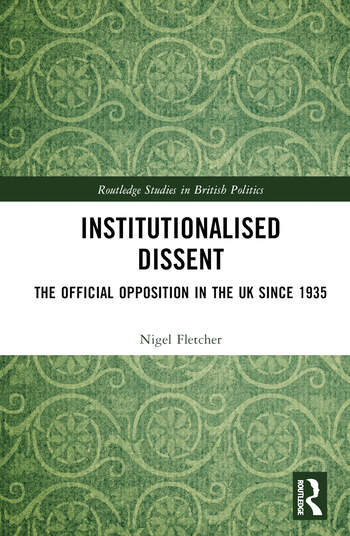
Following on from the publication of The Not Quite Prime Ministers in September, Institutionalised Dissent: The Official Opposition in the UK since 1935 has now just been published by Routledge.
This one is rather different though. For a start, I’m not expecting many general readers to rush out and buy it, given it currently has a very “academic publishing” price-tag. At most, I hope those academics who find it of interest will help give it a push, get it stocked in their institutions’ libraries and so on. But despite it having a rather more niche audience, I still wanted to mark this moment, the publication of my first academic monograph.
It is no exaggeration to say it has been more than 20 years in the making. In 2001 my undergraduate dissertation touched on the recent history and organisation of the Opposition (from 1997-2001), and this was pleasingly well-received. After that, opposition became an enduring interest, and I wanted to delve deeper and tell the story from much further back. I therefore arranged to meet my former supervisor from Queen Mary, Professor Ken Young, and told him I wanted to write a whole book on the topic.
Ken was very encouraging, but suggested that instead of just writing a book, I embark upon a PhD instead (“If you’re going to do the research, you may as well!”). So in 2004/5 I registered as a part-time student at Goldsmiths College and… then didn’t really do very much.
Frankly, I was rather too busy at that time with the practice of opposition, both in Westminster and Greenwich, with a day job and Council duties that consumed all my time.
It wasn’t until I transferred to King’s College London in 2008 and quit my job in the Conservative Research Department that I finally got started in earnest. Ken had by then also moved to King’s from Queen Mary and became my PhD supervisor. Over regular coffee and cake, he kept me focussed, encouraged me, and slowly (often VERY slowly), the PhD started to take shape. It was still a challenge, especially still being part-time and juggling work commitments, but eventually it came together. With support from other academics including my now-colleague Dr Michael Kandiah, in 2017 I submitted my opus, defended it at a Viva, and after some “corrections” (academic speak for a redraft), I was suddenly Doctor Fletcher, and began teaching at King’s.
But that was never going to be the end of the thesis. After a bit of a break from it, I was pleased when Professors Tim Bale and Patrick Diamond (fittingly, both at my alma mater, Queen Mary) accepted my proposal to turn it into an academic monograph for their “Studies in British Politics” series at Routledge. Rewrites and more rewrites followed, not least because the thesis had only told the story up to 2010. Now it was coming right up to date, and I had over a decade of Miliband, Corbyn and Starmer to research and write. There were more interviews to do, and further delving into the archives to improve earlier sections. It was a major exercise, and I was adding new material right up to submission.
And now, here it is. Institutionalised Dissent: The Official Opposition in the UK since 1935. It may not trouble the bestseller lists, even in the world of academia, but it is probably as close to being my life’s work as anything else I’ve yet done, and I can’t quite believe it’s finally out there in the world.
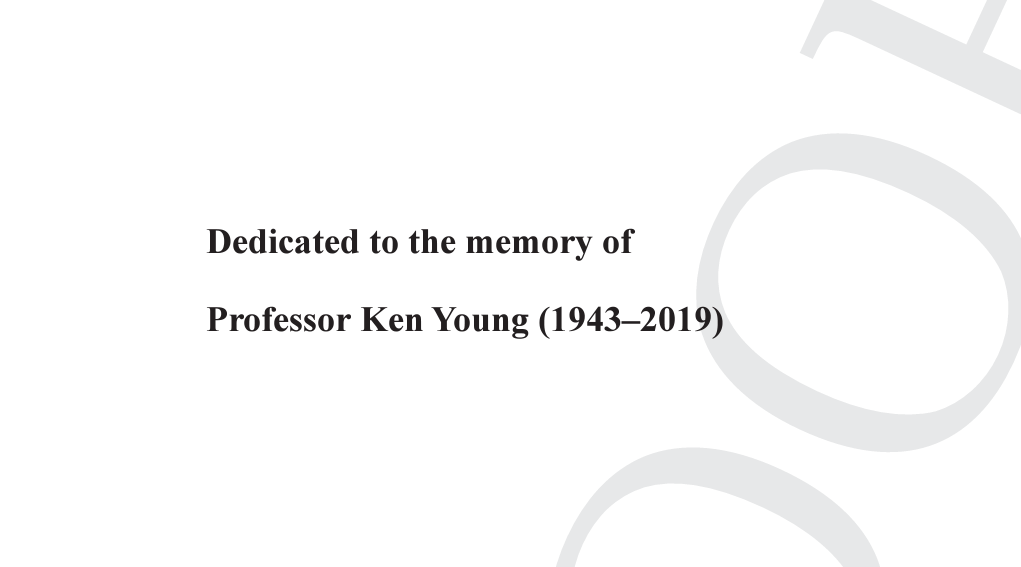
My only deep regret is that there is one person who is not around to mark this moment with me. Ken Young, who gave me such encouragement and was such a cheerful and kind supervisor, died in 2019, just a year after seeing me finally get my PhD. The book, of course, is dedicated to him. Its publication date is also poignant. This
Earlier this month, the 3rd January, would have been his 80th birthday, and I will mark the occasion with a coffee and a slice of cake, in memory of those many enjoyable supervisions, and in grateful thanks for that conversation 20 years ago that led me back into academia and, eventually, to this book.
Thank you, Ken.

 Dr Nigel Fletcher
Leave a comment